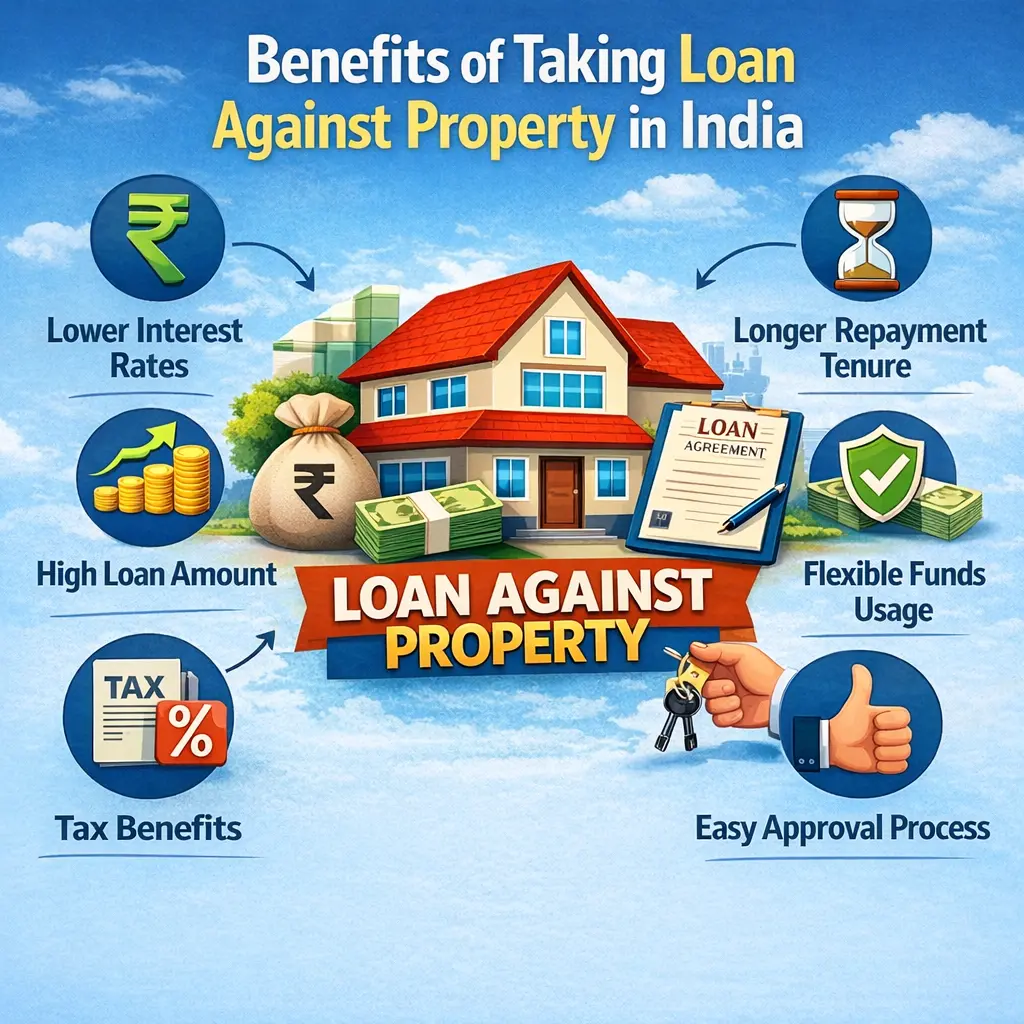
Loan Against Property (LAP) is a secured loan where borrowers pledge their property as collateral to get funds from banks or NBFCs. LAP is increasingly popular in India because it offers high loan amounts at lower interest rates. Here we explain the key benefits of taking a LAP and why it might be the right choice for your financial needs.
Since LAP is a secured loan, lenders offer interest rates significantly lower than unsecured loans like personal loans. This reduces your overall borrowing cost.
Lenders usually provide 50%–70% of the property’s market value as a loan. This allows you to borrow a larger sum compared to personal loans, making it suitable for business expansion, home renovation, or education.
LAP offers longer repayment periods, often up to 15–20 years. A longer tenure reduces your EMI burden and makes repayment more manageable.
Funds from a LAP can be used for multiple purposes including business needs, medical emergencies, debt consolidation, higher education, or personal investments.
Even though your property is pledged as collateral, ownership remains with you. This means you can continue living in your property or generate rental income while availing the loan.
For business or income-generating purposes, the interest paid on LAP may be tax-deductible under Indian income tax laws. Consult a tax advisor for eligibility.
With lower interest rates and longer tenures, LAP EMIs are more affordable, making it easier to manage your monthly finances.
Once property valuation and documentation are complete, funds are usually disbursed quickly, providing timely financial support.
Many lenders allow partial or full prepayment without heavy penalties, helping you save on interest if you receive a windfall.
Loan Against Property in India is a powerful financial tool offering lower interest rates, higher loan amounts, flexible usage, and longer tenures. It is ideal for both personal and business financial needs. Always compare lenders, check eligibility, and read the fine print to maximize benefits and minimize risk.