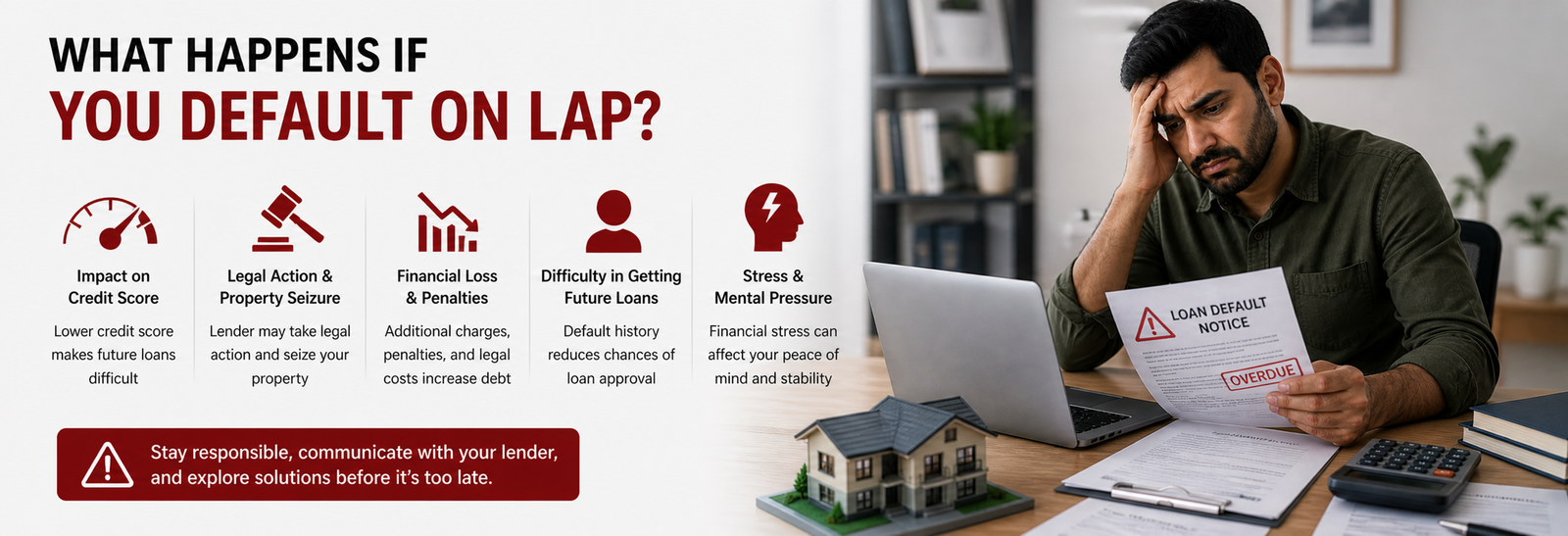
A Loan Against Property (LAP) is a secured loan, which means your property is pledged as collateral. If you fail to repay your loan EMIs on time, it is considered a default. Defaulting on a LAP can have serious financial and legal consequences.
If you miss your EMI, lenders charge late payment fees and penalties. Continuous delays increase your total outstanding amount.
Defaulting on EMIs negatively affects your credit score. A low credit score makes it difficult to get future loans or credit cards.
The lender will start reminders through calls, messages, and emails. They may also send recovery agents if payments are not made.
If your EMI remains unpaid for 90 days, the loan may be classified as a Non-Performing Asset (NPA), which is a serious financial status.
The lender may issue a legal notice asking you to clear your dues within a specific time period. Ignoring this can lead to further legal action.
Since LAP is a secured loan, the lender has the right to take possession of your pledged property if you fail to repay the loan.
If the dues are not cleared, the lender can auction your property to recover the outstanding loan amount, interest, and penalties.
You may also have to bear legal charges, recovery costs, and additional penalties, increasing your financial burden.
A history of default reduces your chances of getting loans in the future. Lenders may reject your application or offer loans at higher interest rates.
Loan default can lead to mental stress, financial instability, and long-term impact on your financial planning.
Plan your EMI properly, maintain emergency funds, avoid over-borrowing, communicate with your lender in case of financial issues, and consider restructuring options if needed.
Defaulting on a Loan Against Property can lead to serious consequences, including loss of your property. It is important to borrow responsibly, understand your repayment capacity, and take timely action to avoid default.