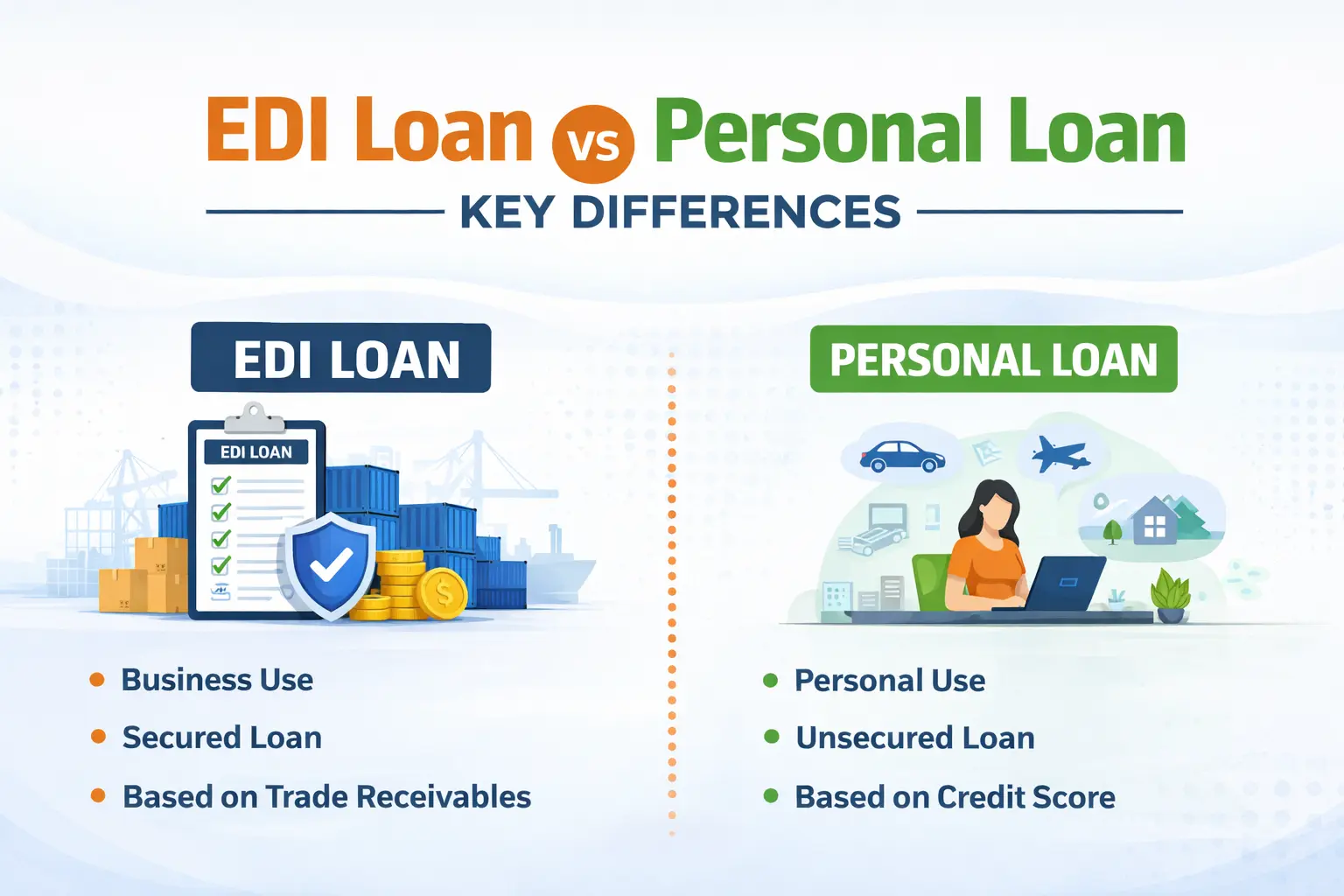
Loans are one of the most common financial tools used by individuals and businesses to meet their financial needs. Among the various types of loans available, EDI loans and personal loans are two options that many people consider. Although both provide financial support, they are designed for different purposes and have different eligibility requirements, benefits, and repayment structures.
Understanding the difference between an EDI loan and a personal loan is important before applying for any financial assistance. Choosing the right loan type can help borrowers manage their finances effectively and achieve their financial or business goals.
An EDI loan is generally designed to support entrepreneurs and small business owners who want to start or expand their businesses. The purpose of this loan is to promote entrepreneurship by providing financial assistance to individuals who have strong business ideas but lack the required capital.
EDI loans are often associated with programs that focus on business development, startup funding, and small enterprise growth. The loan amount is usually used for business-related expenses such as purchasing equipment, setting up infrastructure, buying raw materials, or expanding operations.
A personal loan is a type of unsecured loan that individuals can use for various personal expenses. Unlike business loans, personal loans are not restricted to a specific purpose. Borrowers can use the loan amount for medical emergencies, travel expenses, education, home renovation, weddings, or other personal financial needs.
Personal loans are usually easier to obtain because they do not require a business plan. However, the approval depends heavily on the applicant’s credit score, income stability, and repayment capacity.
The main difference between an EDI loan and a personal loan lies in their purpose. EDI loans are specifically designed for business development and entrepreneurial activities. They help individuals start new ventures or expand existing businesses.
Personal loans, on the other hand, are meant for personal financial requirements and can be used for multiple purposes without restrictions.
Eligibility requirements for EDI loans are often based on the applicant’s business idea, business plan, and the potential for business growth. Some lenders may also consider the applicant’s experience in the business field.
Personal loan eligibility usually depends on the applicant’s monthly income, employment stability, and credit score. Salaried employees and self-employed individuals with a stable income are more likely to get approved for personal loans.
The loan amount offered under EDI loans can vary depending on the nature of the business and the financial requirement of the project. For startups or small businesses, the loan amount may be moderate, while larger business expansion plans may qualify for higher funding.
Personal loans usually have predefined limits based on the borrower’s income and repayment capacity.
Interest rates for EDI loans may vary depending on the lender, loan scheme, and borrower profile. Some programs that support entrepreneurship may offer relatively lower interest rates to encourage business development.
Personal loan interest rates are generally higher because they are unsecured loans and do not require collateral.
EDI loans often require business-related documents such as a business plan, project report, and financial projections. Lenders need these documents to evaluate the viability of the business.
Personal loans usually require fewer documents. Basic documents such as identity proof, address proof, income proof, and bank statements are typically sufficient.
The repayment structure for both types of loans is usually based on monthly installments. However, the repayment terms for EDI loans may sometimes be more flexible because they are designed to support business growth.
Personal loan repayment terms are usually fixed and depend on the loan tenure selected by the borrower.
Choosing between an EDI loan and a personal loan depends on your financial goals. If you are planning to start or expand a business, an EDI loan is generally a better option because it is specifically designed for entrepreneurial purposes.
However, if you need funds for personal expenses such as travel, medical needs, or home improvements, a personal loan may be the more suitable choice.
Both EDI loans and personal loans serve important financial purposes, but they are designed for different needs. EDI loans focus on supporting entrepreneurs and promoting business development, while personal loans provide flexible funding for personal financial requirements.
Before applying for any loan, it is important to carefully evaluate your financial situation, repayment capacity, and the purpose of the loan. Choosing the right loan type can help you achieve your financial goals while maintaining financial stability.