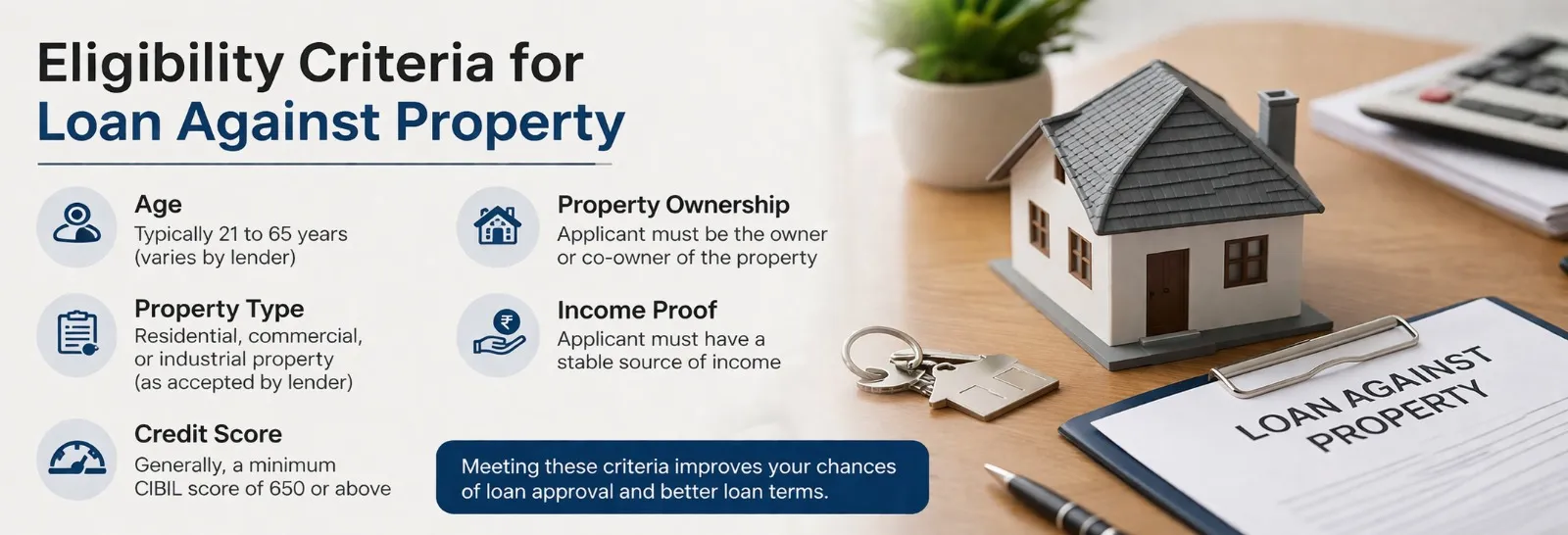
Loan Against Property (LAP) is a secured loan where borrowers pledge their residential or commercial property to avail funds. To get approval, lenders evaluate various eligibility criteria to ensure repayment capability and property value.
Applicants should typically be between 21 to 65 years of age at the time of loan maturity. This may vary slightly depending on the lender.
Both salaried and self-employed individuals are eligible. Salaried applicants should have a stable job, while self-employed individuals must have a steady business income.
Lenders assess your income to determine repayment capacity. A higher and stable income increases your chances of approval and better loan terms.
A credit score of 700 or above is generally preferred. A higher score improves eligibility and helps in securing lower interest rates.
The property pledged must be legally clear and can be residential, commercial, or industrial. Its condition and market value play a crucial role in loan approval.
Lenders usually offer 50% to 70% of the property's market value as a loan, depending on risk assessment and borrower profile.
Salaried individuals should have at least 1–2 years of work experience, while self-employed applicants should have a business vintage of 2–3 years.
Your current loans and financial obligations are considered. Lower debt-to-income ratio improves your eligibility.
Basic documents include KYC (Aadhaar, PAN), income proof, bank statements, and property documents. Complete and accurate documents speed up approval.
Meeting the eligibility criteria for Loan Against Property is essential for smooth approval and better loan terms. Maintaining a good credit score, stable income, and clear property documents can significantly improve your chances of getting the best deal.