
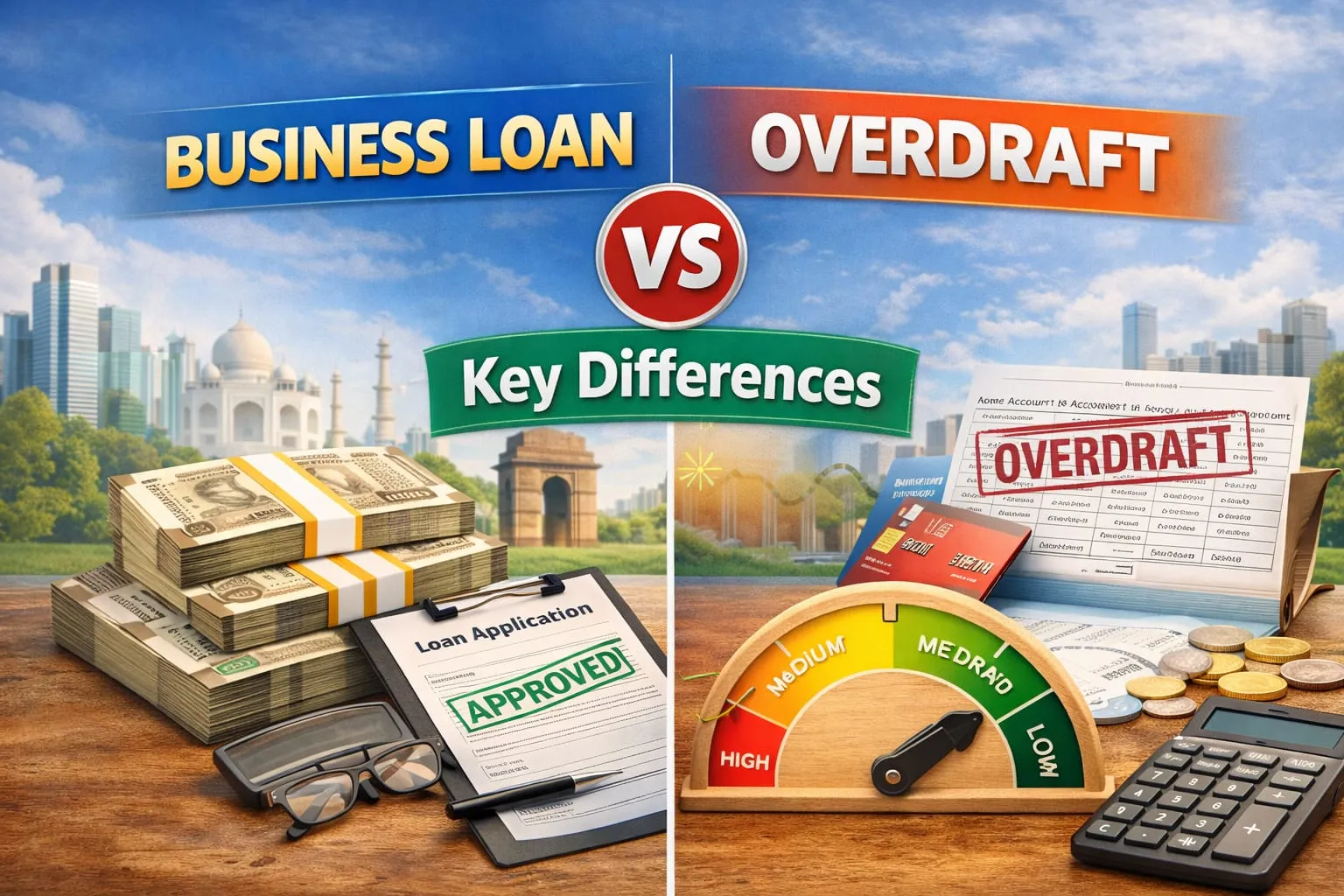
Businesses often require funds to manage operations, expansion, or short-term cash flow needs. Two common financing options are business loans and overdraft facilities. Understanding their differences helps you choose the right option for your financial needs.
1. What is a Business Loan?
A business loan is a fixed amount borrowed from a bank or NBFC for a specific purpose such as expansion, purchasing equipment, or working capital. It is repaid in fixed EMIs over a defined tenure.
2. What is an Overdraft?
An overdraft is a flexible credit facility linked to your bank account. It allows you to withdraw more than your account balance up to a pre-approved limit.
3. Loan Amount & Usage
Business loans provide a lump sum amount for planned expenses, while overdrafts are ideal for managing short-term cash flow gaps and daily operational needs.
4. Interest Calculation
In business loans, interest is charged on the full loan amount. In overdrafts, interest is charged only on the amount utilized, making it cost-effective for short-term usage.
5. Repayment Structure
Business loans are repaid through fixed EMIs over a set tenure. Overdrafts offer flexible repayment, where you can deposit and withdraw funds as needed.
6. Tenure
Business loans have a fixed repayment tenure ranging from 1 to 5 years or more. Overdrafts are usually short-term facilities that are renewed annually.
7. Collateral Requirement
Business loans may be secured or unsecured depending on the lender. Overdrafts are often secured against assets like property, fixed deposits, or business receivables.
8. Flexibility
Overdrafts provide higher flexibility as you can use funds multiple times within the limit. Business loans are less flexible since the amount is disbursed once.
9. Best Use Case
Choose a business loan for long-term investments or expansion. Opt for an overdraft facility for managing working capital and short-term cash requirements.
Conclusion
Both business loans and overdrafts serve different financial purposes. While business loans are suitable for planned expenses, overdrafts are ideal for handling cash flow fluctuations. Evaluate your business needs carefully before choosing the right option.